


Pill Mill Secrets Revealed: What Your Pharmacy Doesn't Want You to Know
- Robert Routt

- Jan 16
- 5 min read
I'm not writing this as a journalist who researched pill mills from behind a desk.I'm writing this as someone who nearly died because of them.
I watched the system—doctors, pharmacies, the whole damn thing—fail spectacularly while counting their cash.
What a Pill Mill Actually Looks Like
You've probably heard the term "pill mill" thrown around on the news. Maybe you picture some sketchy back-alley clinic with a neon sign. That's not how it works.
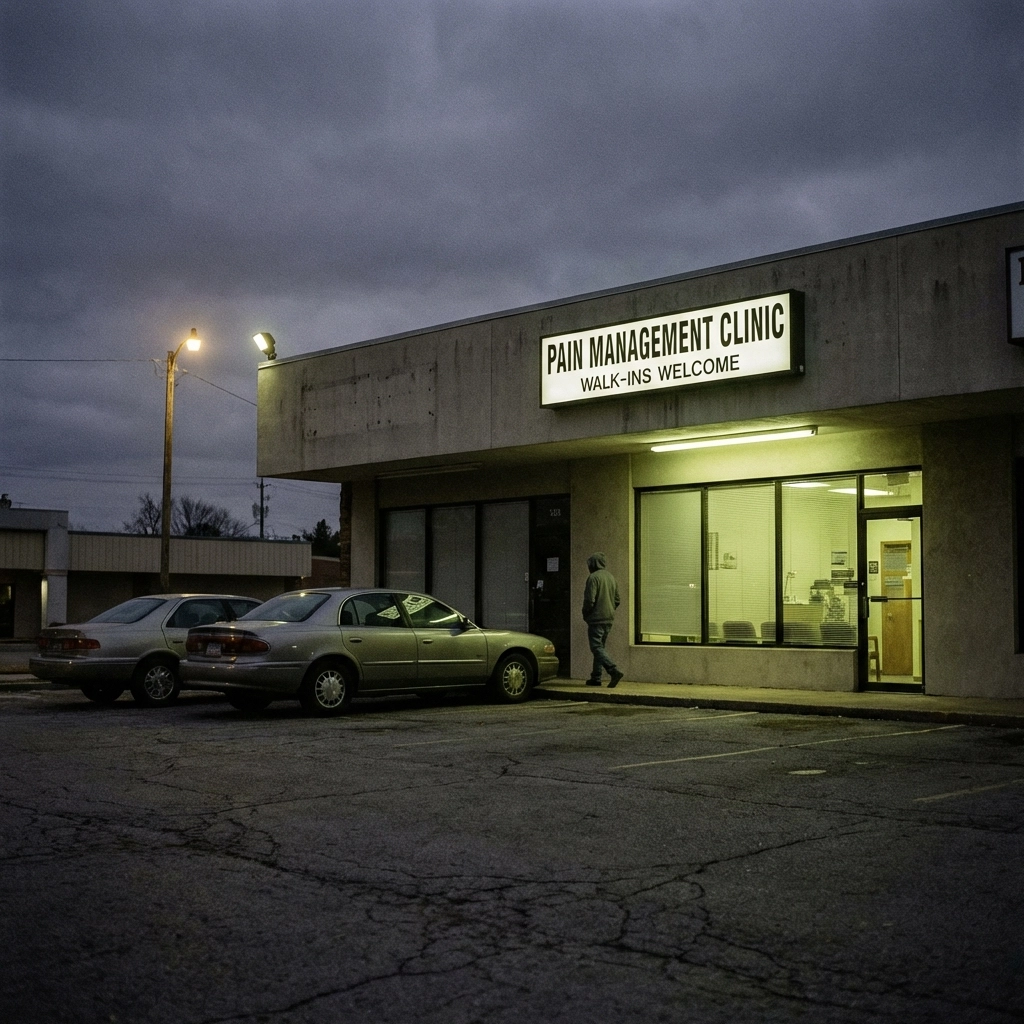
The pill mill that contributed to destroying my life looked legitimate. It had a waiting room. Magazines. A receptionist who smiled. It looked like any other pain clinic you'd find in a strip mall.
That's the trick.
These operations masquerade as real medical facilities. They have doctors, actual licensed physicians, writing prescriptions. They have filing systems and appointment books. On paper, they look like healthcare.
But here's what happens behind those closed doors:
Minimal evaluation - You walk in, describe some pain, and walk out with a prescription for opioids in under fifteen minutes
Cash only - No insurance, no paper trail, no questions asked
Volume over care - The more patients processed, the more money made
On-site pharmacies - Some have their own dispensaries so they control everything from prescription to pill bottle
It's a business model. Not a medical practice. The product just happens to be addictive substances that can kill you.
The Pharmacy Problem Nobody Talks About
Here's where it gets uncomfortable.
Pill mills couldn't exist without pharmacies willing to fill those prescriptions.
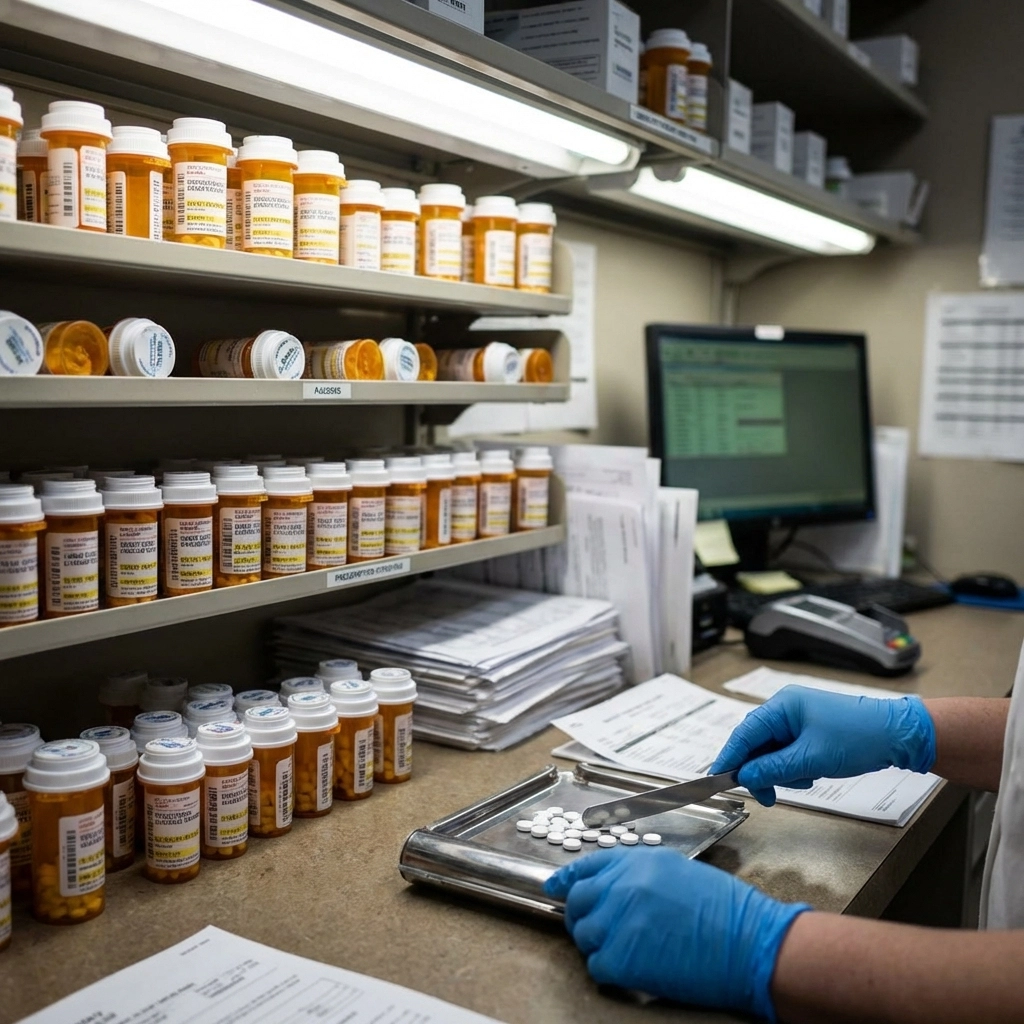
Every single one of those opioid scripts had to go somewhere. Someone had to count those pills, put them in a bottle, and hand them over.
That someone was often a major pharmacy chain.
I know because I lived it. Walgreens filled prescriptions that should have raised every red flag in the book. Quantities that made no medical sense. Frequencies that screamed addiction, not treatment. Patterns that any trained professional should have caught.
They filled them anyway.
Why? Because opioids are profitable. Predictable. Refillable. Scalable.
The oversight that's supposed to exist? The checks and balances? They failed.
Not occasionally, systematically. Pharmacists are supposed to be the last line of defense between a bad prescription and a patient. They're supposed to question.
To verify. To refuse if something doesn't add up.
But when corporate pressure meets quota demands meets profit margins, patients become transactions. Pills become products. And people like me become casualties.
The Real Business Model
Let me break down how the money flows because once you see it, you can't unsee it.
A pill mill doctor sees maybe 50-100 patients a day. Cash visits run anywhere from $200 to $500 each. That's potentially $50,000 a day. Just from the "consultation."
Then the prescriptions get filled. The pharmacy makes their cut. The pharmaceutical distributors ship more product. The manufacturers keep producing.
Everyone eats. Everyone profits.
Except the patient who's now dependent on a substance they never should have been prescribed in the first place.
Between 2010 and 2019, the overwhelming majority of opioid-related criminal cases against physicians occurred—during the very years pill mills were allowed to operate openly.
What They Don't Want You to Know
Here's the part that really burns me up.
They knew.
The pharmacies knew. The distributors knew. The manufacturers knew. There were internal reports. There were warnings. There were pharmacists and employees who raised concerns.
And those concerns got buried under profit projections and shareholder expectations.
They tracked the data. They saw the patterns. They watched communities get flooded with more pills than the entire population could possibly need for legitimate pain management.
They shipped them anyway.
South Florida became ground zero. Then Texas. Alabama. Communities across the country watched their neighbors, their kids, spiral into addiction fed by a supply chain that treated controlled substances like candy.
The system that was supposed to protect people? It protected profits instead.
The Human Cost Nobody Calculates
Numbers are easy to ignore. Let me make it personal.
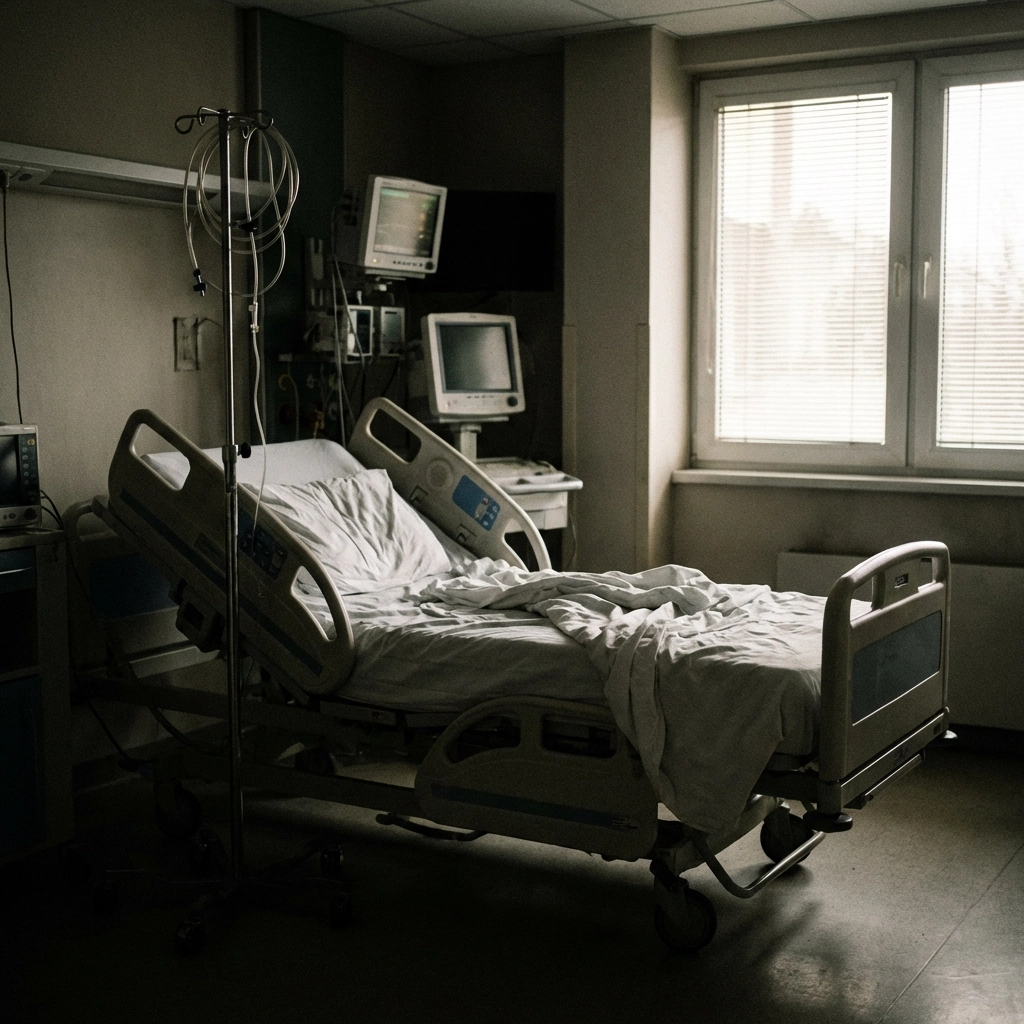
I ended up in a coma. My family didn't know if I'd wake up. When I did wake up, I had to learn who I was again. I had to rebuild relationships that had been shattered. I had to face what had happened to my body, my mind, my life.
That's the cost.
It's not a statistic. It's sitting in a hospital bed wondering if you'll ever be the same. It's watching your family's faces and seeing fear mixed with exhaustion mixed with anger they're trying to hide. It's starting over from nothing because addiction took everything.
And it didn't have to happen.
If one doctor had said no. If one pharmacist had questioned the prescription. If one checkpoint in that long chain had actually worked, maybe I wouldn't have almost died.
But the system was built to say yes. Yes to the prescription. Yes to the refill. Yes to the next bottle and the next and the next.
Until there's nothing left.
The Cover-Up Continues
You'd think after everything that's come out, the lawsuits, the settlements, the criminal cases, that things would be different now.
Some things have changed. Enforcement got serious. Some pill mills got shut down. Some doctors lost their licenses or went to prison.
But the underlying problem? The profit motive that drives the pharmaceutical industry? The pressure on pharmacies to fill prescriptions and keep customers happy?
That hasn't gone anywhere.
The opioid crisis didn't end. It evolved. And the same systemic failures that enabled pill mills to flourish are still baked into how healthcare works in this country.
Until we talk about it, really talk about it, without the corporate spin and the legal disclaimers, nothing fundamental changes.
Why I Wrote My Story
I didn't write Almost Gone to point fingers. Well: maybe a little.
But mostly I wrote it because someone needs to say out loud what happened.
The real story. Not the sanitized version. Not the press release.
The raw truth about how a Navy veteran ended up in a coma because a system designed to heal people became a system designed to profit from their pain.
If you want to understand what this story is really about, it's not just about me.
It's about the thousands of people who went through the same thing. The ones who didn't make it. The families still picking up the pieces.
It's about shining a light into the dark corners that pharmacies and pill mills hoped would stay hidden forever.
What You Can Do
I'm not going to tell you the system is going to fix itself. It won't.
But you can be informed. You can ask questions when a prescription seems off.
You can demand answers when something doesn't feel right. You can support healthcare reform that prioritizes patients over profits.
And you can share stories like mine. Because the more people who know the truth about how pill mills operated: and how pharmacies enabled them: the harder it becomes for anyone to pretend it didn't happen.
I almost died so that this story could be told.
The least I can do is tell it.


Comments