


7 Pharmacy Red Flags That Nearly Killed Me (And How to Spot Them Before It's Too Late)
- Robert Routt

- Feb 6
- 6 min read
I was filling prescriptions at Walgreens like clockwork. Early. Often. Multiple doctors. High doses. The kind of pattern that should've triggered every alarm in the system.
It didn't.
Instead, I kept getting my pills. Month after month. Prescription after prescription. Until my body finally gave out and I ended up in a coma for 3.5 weeks.
The red flags were there. The pharmacy just didn't catch them. Or didn't care enough to act on them.
I'm not writing this to play victim. I made choices that put me in that situation. But the system, the pharmacies, the oversight, the supposed safeguards, failed spectacularly. And those failures nearly cost me my life.
So let me walk you through the seven red flags that got missed in my case. Because if you or someone you love is filling prescriptions, you need to know what to look for before it's too late.
Red Flag #1: Early Refills That Became a Pattern
I wasn't just occasionally running out of pills a few days early. I was consistently refilling prescriptions before I should've needed them.
Week after week, I'd show up at the pharmacy counter. And week after week, they'd fill them.
Here's the thing: one early refill can happen. You lost your pills. You're going on vacation. Life happens. But when early refills become a pattern, that's a screaming red flag that someone is either abusing their medication or diverting it.
The pharmacy's computer system tracks this. They know when you're refilling early. They're supposed to question it. They're supposed to contact your doctor. They're supposed to, at minimum, have a conversation with you about it.
Mine didn't.
What you need to know: If you're filling controlled substances and you find yourself always running out early, that's a problem. If the pharmacy never questions it, that's a bigger problem. A functioning system would've stopped me. It didn't.
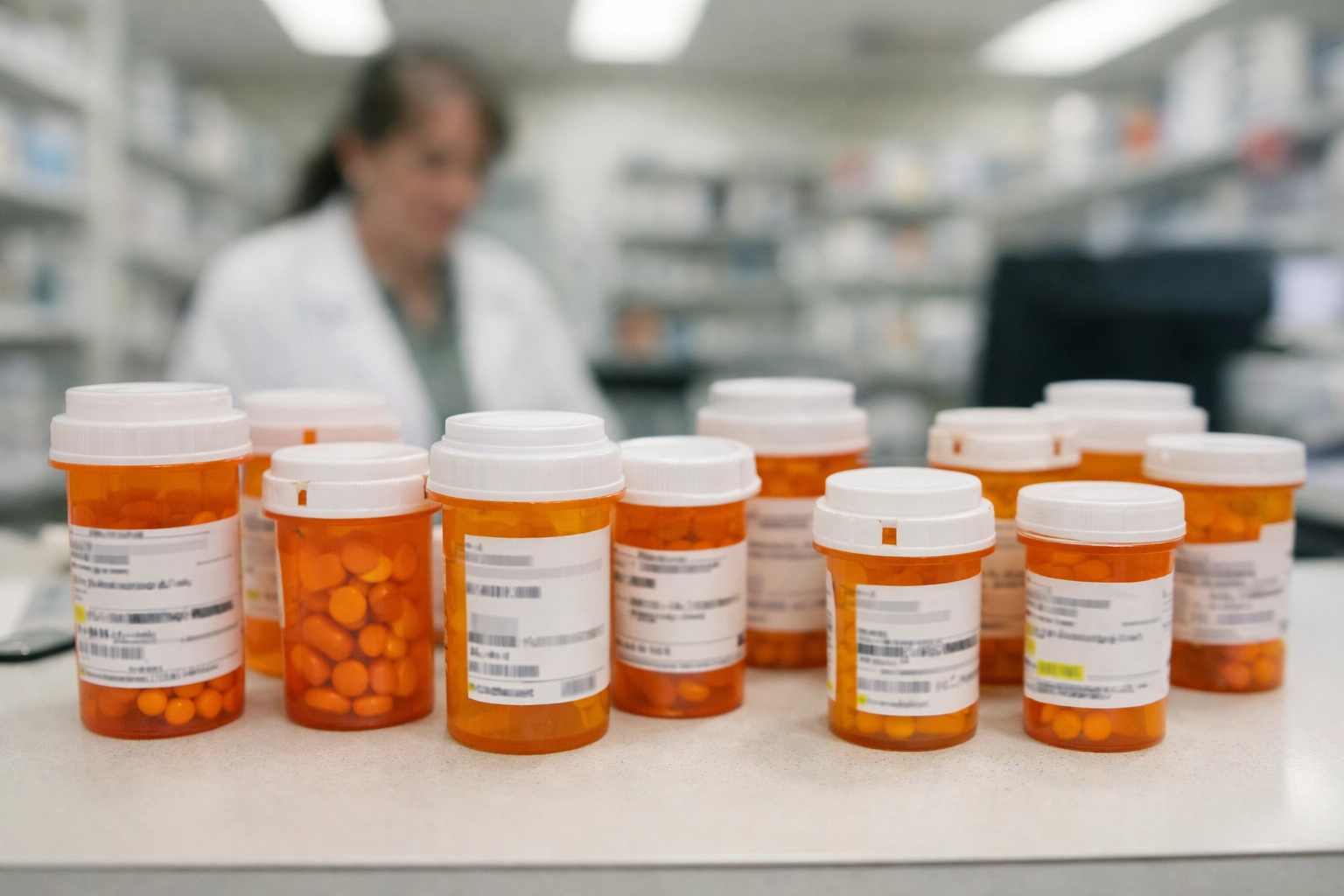
Red Flag #2: High Dosages That Kept Climbing
My dosages weren't just high. They were escalating.
When you're on opioids or benzodiazepines long-term, tolerance builds. You need more to get the same effect. That's basic pharmacology. And it's exactly why these medications are supposed to be carefully monitored.
But instead of anyone raising concerns about why my doses kept going up, the prescriptions just kept getting filled. Higher and higher. No questions asked.
Pharmacists are trained to recognize dangerous dosing patterns. They're supposed to use their professional judgment to refuse fills that could harm or kill you. That's literally part of their job.
When someone is consistently on high doses of multiple controlled substances, that's a conversation that needs to happen. It didn't happen for me until after I nearly died.
What you need to know: If your doctor keeps increasing your doses and your pharmacy never pushes back, you're in dangerous territory. The fact that it's legal doesn't make it safe.
Red Flag #3: Multiple Prescribers for the Same Drug Class
I had more than one doctor writing prescriptions for controlled substances. Different offices. Different specialties. All feeding into the same addiction.
This is called "doctor shopping," and it's supposed to be one of the easiest red flags to catch. Most states have Prescription Drug Monitoring Programs (PDMPs) that track exactly this kind of behavior.
The pharmacy can see it. They're supposed to see it. They're supposed to contact the prescribers and figure out if everyone knows what everyone else is prescribing.
That didn't happen in my case. The system existed. The data was there. Nobody acted on it.
What you need to know: If you're seeing multiple doctors for pain management or anxiety medications, your pharmacy should be coordinating with those providers. If they're not asking questions, that's negligence.
Red Flag #4: Mixing Medications That Should Never Go Together
I was on opioids and benzodiazepines at the same time. That combination is notorious for respiratory depression, it's what kills people. It's what put me in a coma.
Every pharmacist learns this in school. It's not obscure knowledge. It's basic drug interaction screening.
Yet prescription after prescription got filled without intervention.
The pharmacy's computer system flags these interactions automatically. When you try to fill a prescription for two drugs that could kill you together, the system alerts the pharmacist. They're supposed to review it, talk to your doctor, and make a professional judgment call about whether to dispense it.
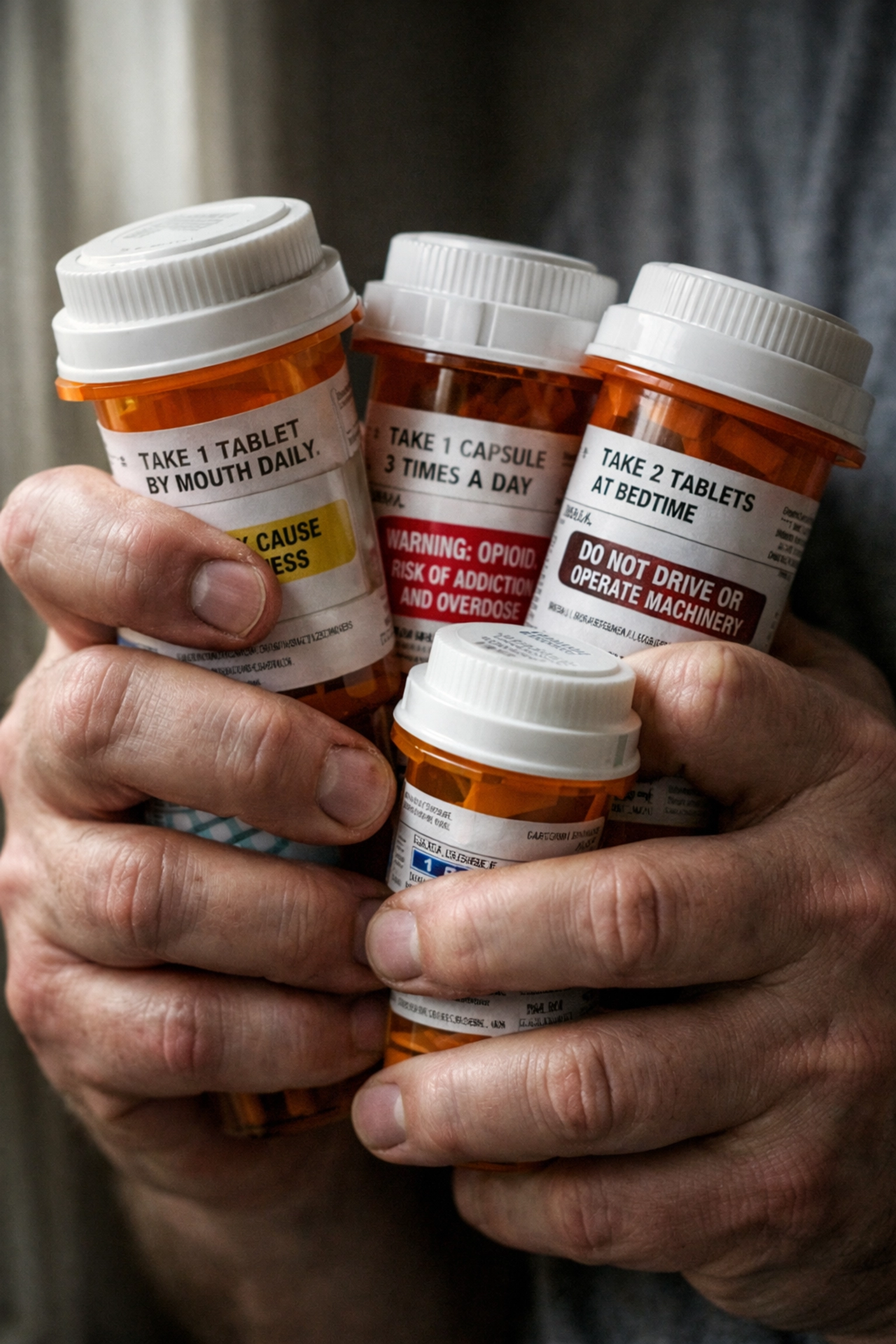
In my case, those warnings got overridden. Month after month.
What you need to know: Opioids plus benzodiazepines is a lethal combination. If you're on both, your pharmacy should be actively monitoring you. If they're not, find a different pharmacy. Your life depends on it.
Red Flag #5: No Therapeutic Rationale Updates
Here's something most people don't know: pharmacists are supposed to maintain documentation about why you're on a medication, especially controlled substances.
What's the diagnosis? What's the treatment plan? Is the medication working? Are there alternatives?
This isn't just bureaucratic paperwork. It's clinical oversight. It's making sure that the prescriptions you're filling actually make medical sense for your condition.
Nobody ever asked me these questions. Nobody ever reviewed whether the medications were actually helping or just feeding an addiction. The pills kept coming, and the conversations never happened.
What you need to know: Your pharmacist should know your medical history, especially for long-term controlled substance use. If they're just filling scripts without ever discussing your treatment, that's a failure of professional responsibility.
Red Flag #6: Paying Cash Instead of Using Insurance
Toward the end, I started paying cash for some prescriptions instead of running them through insurance.
Why? Because insurance companies have limits. They have utilization reviews. They question things. Cash transactions fly under the radar.
And pharmacies know this.
When someone starts paying cash for controlled substances, especially someone who has insurance, that's a massive red flag. It suggests they're trying to hide something from their insurance company, their doctor, or both.
The pharmacy should've questioned it. They should've asked why I wasn't using insurance. They should've wondered what I was trying to hide.
They didn't.
What you need to know: Cash payments for controlled substances should trigger scrutiny, not make things easier. If your pharmacy makes it effortless to bypass insurance oversight, that's not good customer service. That's enabling.
Red Flag #7: No Pharmacist Counseling or Check-Ins
In all the months I was filling dangerous prescriptions, not once did a pharmacist pull me aside for a real conversation.
Not once did anyone say, "Hey, I'm concerned about what you're taking."
Not once did anyone offer resources, suggest alternatives, or express any professional worry about my safety.
I was just another transaction. Another copay. Another customer moving through the line.
Federal law requires pharmacists to offer counseling on new prescriptions. But there's supposed to be ongoing monitoring too, especially for patients on high-risk medications.
That monitoring never happened. I was a ticking time bomb, and nobody bothered to check the timer.
What you need to know: Your pharmacist should be a partner in your healthcare, not just someone who hands you a bag. If they're not checking in, not asking questions, not showing any concern about your medications, that's a problem.
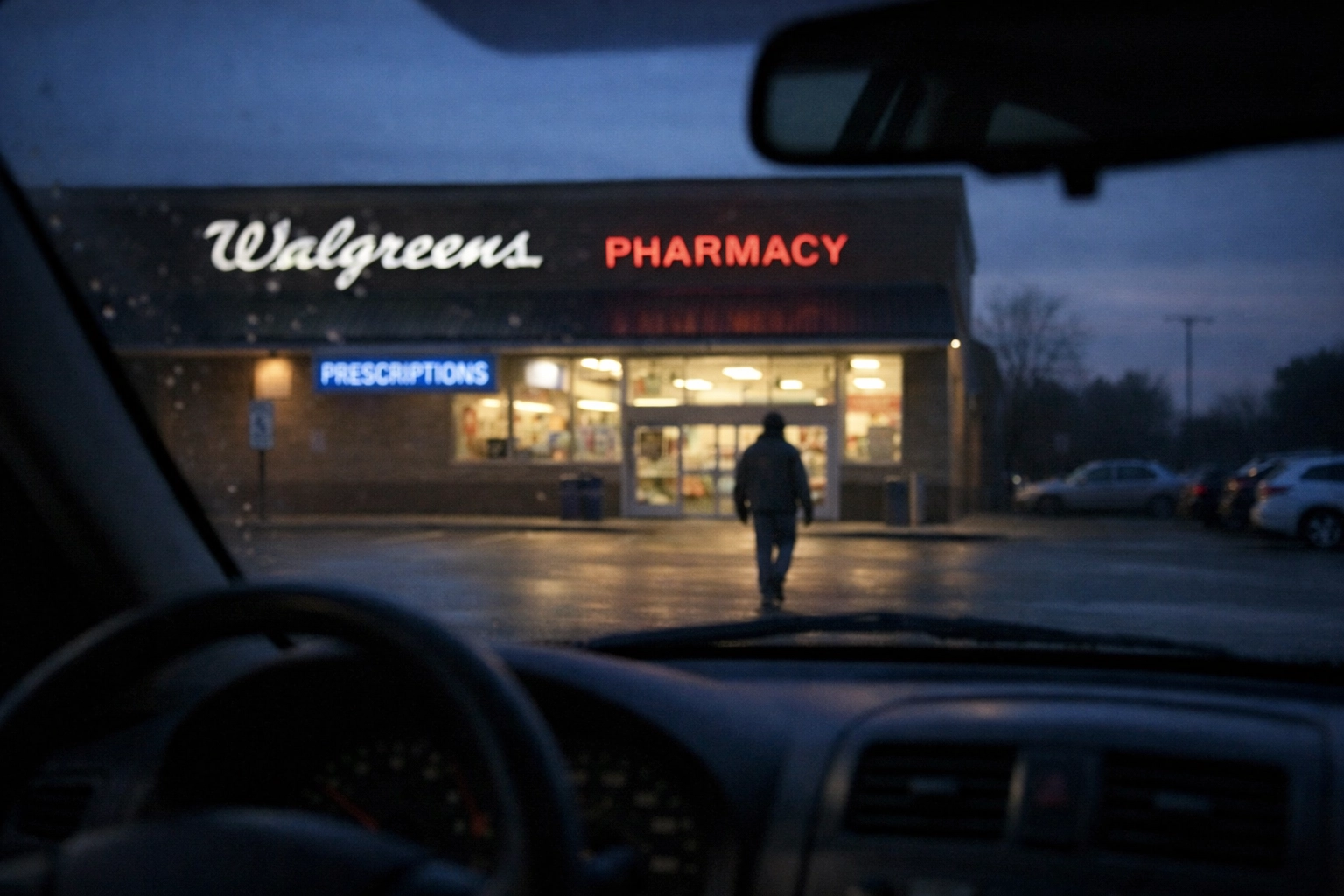
What Should Have Happened (And What Should Happen Now)
Every single one of these red flags existed in pharmacy protocols. The safeguards were supposedly in place.
They just weren't enforced.
Or they were ignored.
Or the pharmacist was too busy, too overwhelmed, too focused on metrics and speed to actually practice pharmacy.
I don't know which it was. What I know is that I nearly died because the system failed.
So what should happen? Here's what I learned the hard way:
If you're filling controlled substances:
Track your own refill patterns. If you're always running out early, that's your sign.
Ask questions about drug interactions. Don't assume the computer or the pharmacist is catching everything.
Be honest with yourself about whether the medications are helping or hurting.
If your pharmacy never questions anything, consider that a warning sign, not a convenience.
If you're worried about someone else:
Look at their pill bottles. Multiple prescribers? High doses? Different pharmacies? Those are red flags.
Ask direct questions about early refills and cash payments.
Offer to go to the pharmacy with them. Sometimes another set of eyes catches what the patient can't see.
If you're a pharmacist reading this:
Please, for the love of God, enforce the red flag protocols. They exist for a reason.
Have the hard conversations. Yes, it's uncomfortable. Yes, patients might get angry. But you might save a life.
Remember that your license comes with responsibility, not just authority.
The Bigger Picture
I survived. Barely. Three and a half weeks in a coma. Months of recovery. Permanent damage to my body and my relationships.
And I was one of the lucky ones.
Thousands of people didn't make it. Thousands more are walking the same path I walked, with pharmacies missing the same red flags that nearly killed me.
This isn't just about my story. This is about a broken system that treats prescriptions like transactions instead of life-or-death decisions.
You can read the full story of what happened to me: the prescriptions, the coma, the brutal recovery, and how I rebuilt my life: in Almost Gone: How Walgreens and the Pill Mills Nearly Took My Life. I wrote it because staying silent felt like letting the system off the hook.
But right now, today, the most important thing is this: if you see these red flags in your own life or someone you love, don't ignore them. Don't assume the pharmacy is protecting you. Don't wait for the system to work the way it's supposed to.
Because I can tell you from experience: by the time the system wakes up, it might be too late.
Stay alert. Ask questions. Trust your gut.
And if something feels off about your prescriptions, it probably is.


Comments